Angry-looking ‘snakes’ spotted lurking in tree, but everything is not as it seems
The natural world and the planet Earth are home to many amazing and fascinating species. It is very amazing to observe how various organisms interact with one another and adapt to their environment in order to survive and keep their ecosystems in balance.
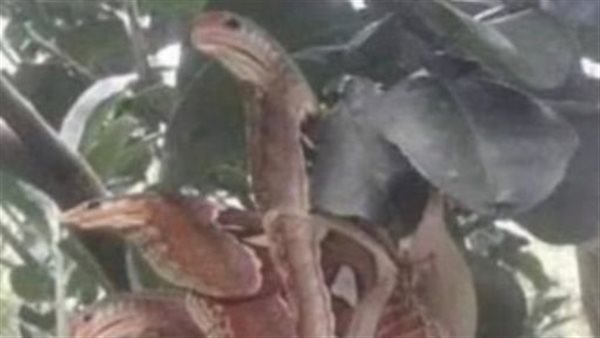
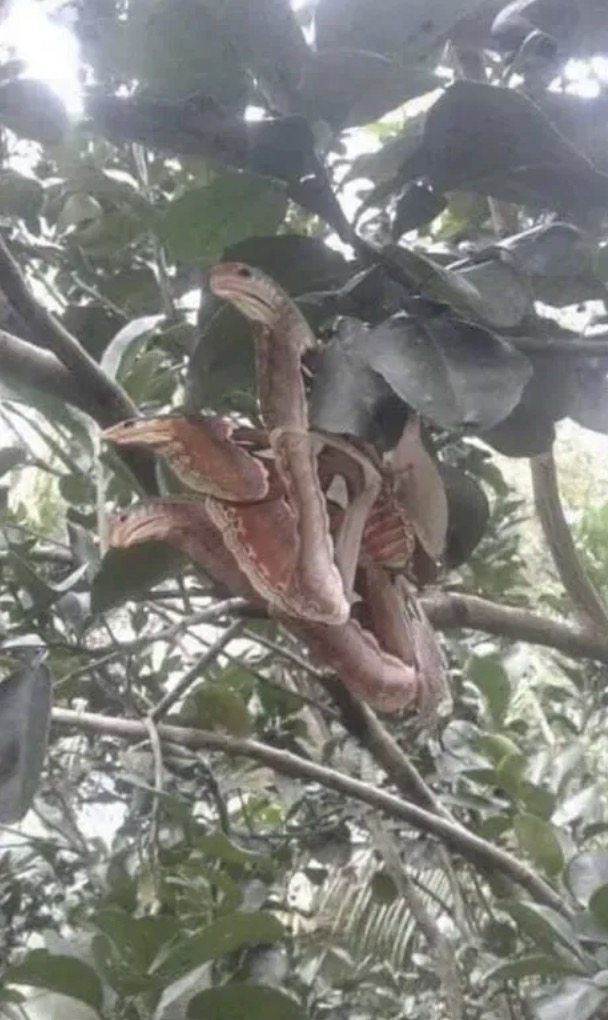
Therefore, I was understandably intrigued when I saw images of three “angry snakes” hiding in a tree. And I’m not the only one who has been duped by these extraordinary pictures.
Three serpents grouped together in a tree can send shivers down anyone’s spine. Seeing one serpent in a tree can be frightening enough. But happily, the eye-catching pictures aren’t actually snakes; they’re of something altogether else.
The vast diversity of species found in nature, numbering in the millions, is known as biodiversity. Each species performs a specific purpose within its habitat. There are also amazing adaptations and survival techniques that several animals and plants have evolved over time.
For instance, some insects have evolved camouflage colors to blend in with their surroundings and evade predators, while others have created toxic compounds to defend themselves against predators.
This reality was brought to light even more when images of three irate-appearing “snakes” began to circulate online. Back in 2021, Rob Allam posted a confusing image to Twitter that appeared to show three angry-appearing “serpents” lurking in a tree.
Users quickly realized, though, that the narrative was more complex than first appeared.
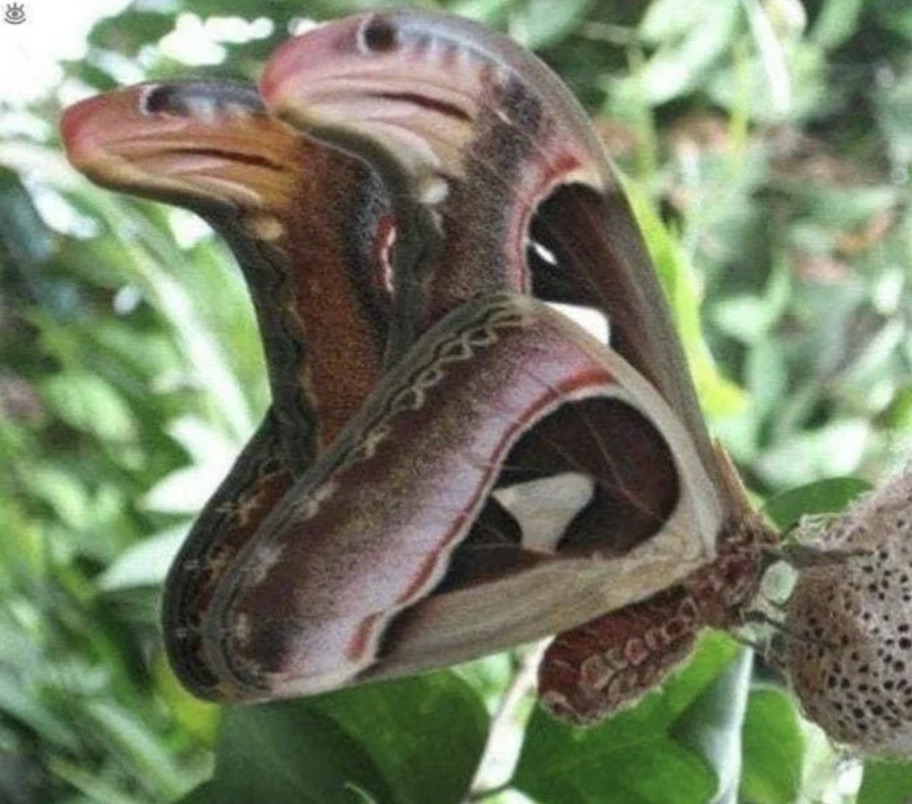
The trio of “snakes” is actually only a piece of the wings from two different species of the Atlas moth, which together form an optical illusion.
This amazing kind of moth, which is found only in the jungles of Asia, has the strange ability to resemble the appearance of a snake. The Atlas moth is one of the largest Lepidoptera species, with wingspan that can reach up to 24 cm (9.4 in) and a wing surface area of over 160 cm2 (25 in2).
The Atlas moth’s body has a noticeable size contrast with its wings, being considerably smaller in comparison. One of the biggest insects on the earth, it was initially observed by Carl Linnaeus in 1758. Due to its considerable size, it gets its name from the Greek mythological Titan Atlas.
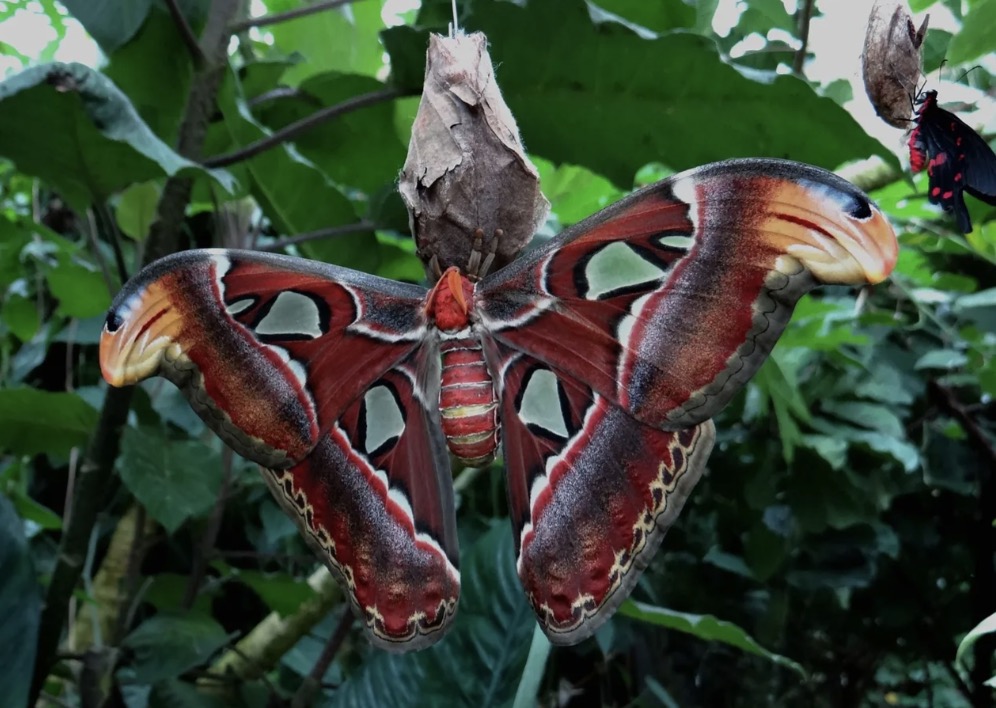
Rob, a Twitter user, shared the trending image and added the following explanation:
”Attacus Atlas is among the largest butterflies worldwide, and during its adult stage, it lives only for a brief span of two weeks. Its primary objective during this stage is to lay eggs and safeguard them until they hatch, all the while camouflaging itself as a snake,” he wrote.