Mom didn’t want to raise baby with Down Syndrome so loyal father decides to raise the baby all on his own

Thousands of infants are born each day all over the world with conditions that set them apart in some manner. Of course, all infants are adorable, and they are all deserving of our love, care, and consideration.
Sadly, not everyone acknowledges this reality. Amazingly, some parents even consider giving up or disowning their kids if they aren’t viewed as ideal in their critical eyes upon birth.
Even though we’re meant to live in an era of reason and understanding, many newborns with Down syndrome are nonetheless born into a world of ambiguity because of persistent prejudice against the disorder.
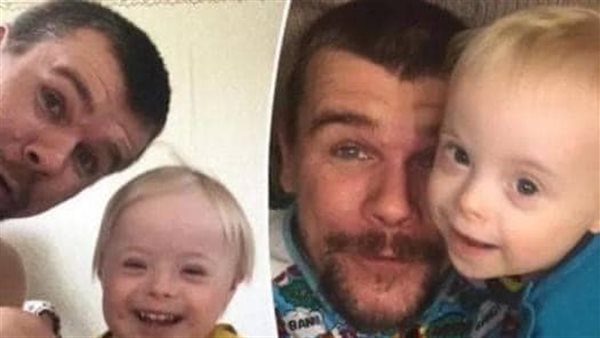
While parenting his son Misha, who has Down syndrome, on his own, a Russian father is working to eradicate any stigma associated with the disease.
Thirty three year old Evgeny Anisimov, is a single father from Russia who is on a mission to show the world how unique and wonderful people with Down Syndrome are.
When their son was born a doctor informed them, “I fear that your baby has Down Syndrome”
His wife decided to leave because of her son’s diagnosis so he was left raising their son on his own.

The dad said: “I didn’t know what to do when I learned of the hypothesis that my son had Down Syndrome. I thought my task now was to turn off emotions, ignite thoughts, support my wife because I believed it would be more difficult for her.
“The results of the analysis we were promised in a few days, and until then, I decided not to say anything to her.”
He continued: “I remember that upon learning that my son has Down Syndrome, I left the hospital and cried, but not for long. Later, I was a little embarrassed by these tears. In my life, after all, nothing had changed, in general.
“I was still with two arms, with two legs, my professional knowledge had gone nowhere. My determination, activity, curiosity, and so on—everything was with me. Everything happened as I planned, my son was born. But the child is special, his life and future destiny are already very significant. And I’m roaring here! This is some kind of selfishness! Is it not fair? No, it is my responsibility. You did not have an amniocentesis—it is clear that the probability was low, but still. You wanted a child, so you took responsibility for it.
After all, there are many options: autism, cerebral palsy, genetic mutations … And Down Syndrome is not the worst, as I learned later.”